Key Takeaways
- Patients in concierge practices pay for the feeling of 24/7 access; AI ensures that “access” is intelligent and immediate, even at 3 AM.
- AI voice agents can perform sophisticated clinical triage, distinguishing between a routine refill request and a cardiovascular emergency.
- By automating the documentation and initial intake, physicians receive a structured “Clinical Brief” before they ever pick up the phone.
In the world of concierge and functional medicine, the patient-physician relationship is sacred. Patients subscribe to these practices specifically to escape the friction of traditional healthcare. They expect a “white-glove” experience where their concerns are heard and addressed without delay. However, for a boutique practice, being “always on” is the fastest route to physician burnout. The challenge is providing 24/7 expert-level responsiveness without chaining your doctors to their phones every night and weekend.
The Cost of the Status Quo
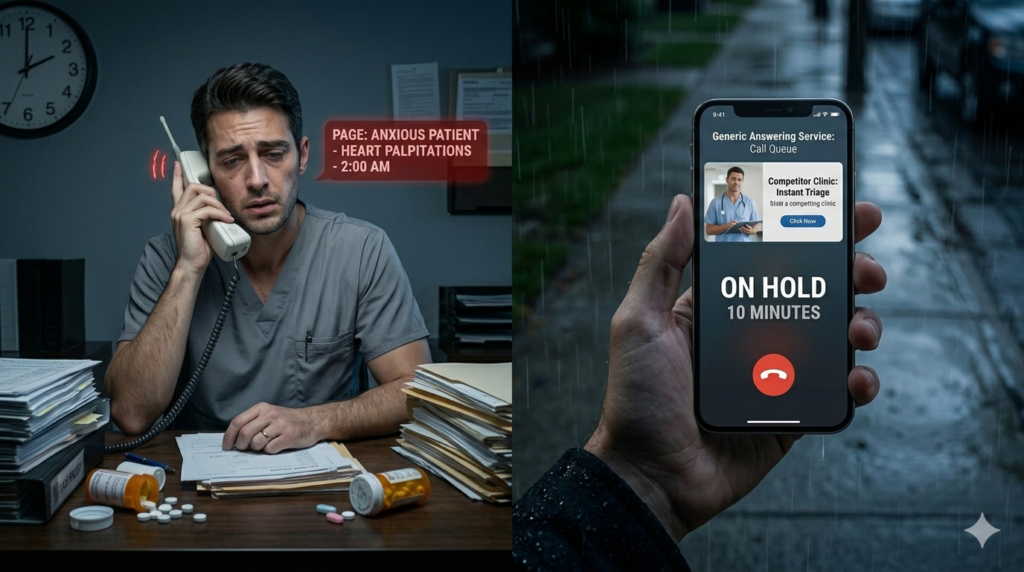
Traditional medical answering services are a major point of friction for premium practices. These services are often staffed by non-clinical operators who lack the vocabulary to understand complex patient needs. They act as “passive gatekeepers,” taking a name and number and promising a callback that might not happen for hours.
For a patient experiencing acute symptoms or a high-anxiety health event, this delay is unacceptable. It erodes the trust that the retainer fee was supposed to buy. On the other side, physicians are often paged for non-urgent matters—like pharmacy hours or lab result status—simply because the answering service doesn’t have the “IQ” to handle the query themselves. This constant “low-level” interruption prevents doctors from focusing on the deep, preventative care their patients pay for.
How AI Automation Recaptures Revenue
Citgentic builds a digital “Clinical Coordinator” that understands your practice’s specific protocols and maintains your brand’s tone of calm, authoritative care.
Sophisticated Symptom Triage
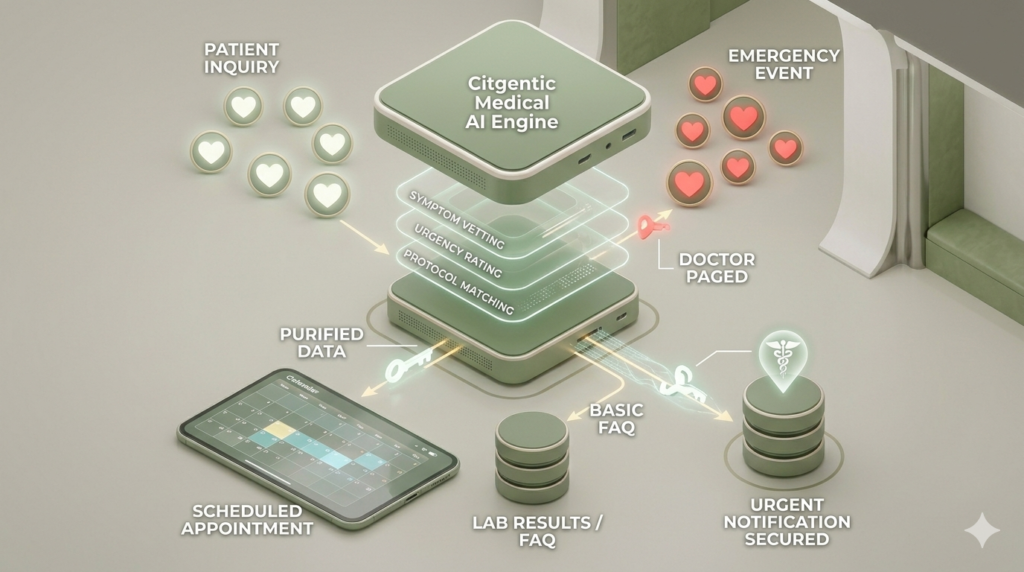
Our AI voice agent is trained on clinical protocols to conduct a “High-IQ” intake. It doesn’t just ask for a phone number; it asks about symptoms, duration, and severity. Using a logic-based triage system, the AI can instantly identify a “Red-Alert” situation (like chest pain or neurological symptoms) and execute an emergency page to the physician or direct the patient to the ER, while simultaneously documenting the entire interaction.
Refill & Results Management
A massive percentage of after-hours calls are administrative. The AI can verify pharmacy information for non-controlled substance refills, provide status updates on lab results, and answer FAQ about upcoming procedures (e.g., “Can I drink water before my blood work?”). By resolving these “Level 1” queries instantly, the AI keeps the physician’s line clear for true medical needs.
Seamless Appointment Integration
If a patient calls with a non-emergency but high-priority concern, the AI doesn’t just take a message. It checks the practice’s real-time schedule and offers an “Urgent Consultation” slot for the next morning. The patient hangs up feeling cared for and scheduled, rather than ignored and waiting for a callback.
Upgrading Your Operational Infrastructure
In premium healthcare, service is a form of medicine. By implementing an AI triage agent, you provide your patients with a tireless, intelligent, and compassionate point of contact that never sleeps. You protect your physicians’ mental bandwidth and ensure that when they do pick up the phone, it’s for a patient who truly needs their expertise. You gain the scalability of a large health system with the intimate, high-speed responsiveness of a private clinic.